
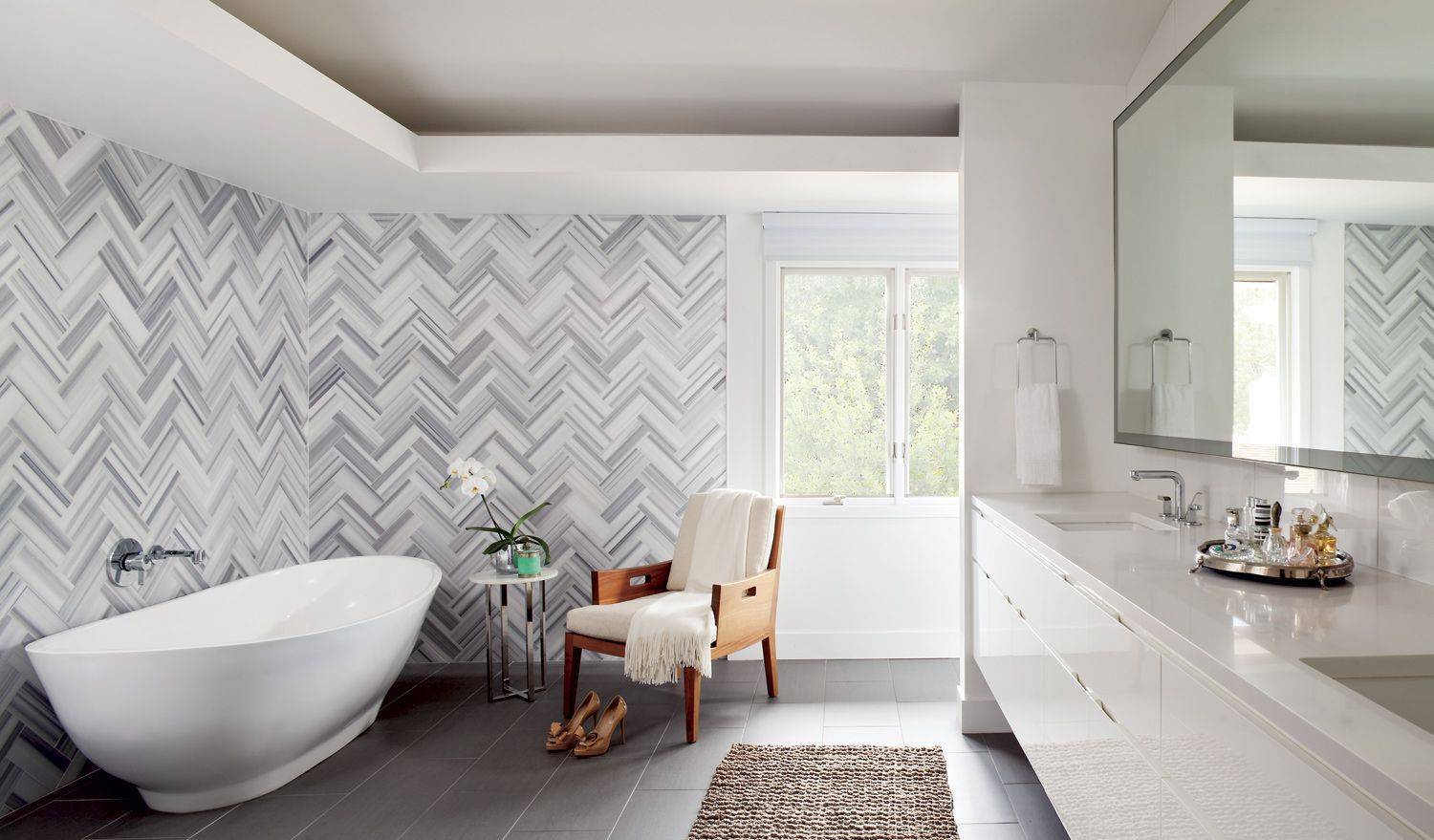
Herringbone brings movement to a surface without relying on loud color or complicated decoration. The angled arrangement can make wood, tile, brick, or stone feel more intentional, whether it covers an entire floor or appears in one carefully chosen detail.
The trick is scale. A large herringbone installation can shape the character of a room, while a small application adds texture without taking over the design.
Make Herringbone Flooring the Main Feature
Floors are one of the strongest places to use the pattern because the repeated V-shaped movement leads the eye naturally through a room. Wood herringbone works especially well in living rooms, dining areas, hallways, and open-plan spaces where the pattern has enough room to develop.
Material choice changes the mood. Light oak feels relaxed and contemporary, while darker wood creates a more formal impression. Homeowners collecting broader outdoor and home ideas can also use the same principle outdoors with suitable weather-rated pavers or tiles.
Think About Plank Proportion
Narrow pieces create a busier, traditional appearance. Wider boards simplify the pattern and often suit modern interiors better.
In a small room, oversized pieces can reduce visual clutter. In a large room, smaller units may introduce richer detail without making the space feel cramped.
Use Herringbone on a Feature Wall
A wall lets you experiment with the pattern without committing an entire room to it. Timber strips behind a bed, textured tile around a fireplace, or slim ceramic pieces behind a vanity can all create a strong focal point.
The surrounding surfaces should usually stay simpler. Design collections focused on comfortable interior spaces can be useful inspiration for balancing patterned surfaces with plain walls, restrained furniture, and quieter finishes.
| Application | Good Material Choice | Visual Effect |
|---|---|---|
| Living room floor | Wood | Warm and architectural |
| Shower wall | Porcelain tile | Crisp and structured |
| Fireplace surround | Stone or tile | Strong focal detail |
| Small backsplash | Ceramic tile | Decorative without excess |
Bring the Pattern Into Kitchens and Bathrooms
Tile herringbone works naturally in wet and hardworking spaces because grout lines emphasize the geometry. A backsplash can introduce the pattern at eye level, while a shower wall gives it enough area to become a recognizable feature.
Simple cabinetry prevents competing shapes from overwhelming the room. Browsing practical room styling ideas can help when deciding how much pattern to combine with storage, lighting, counters, and everyday accessories.
Use Grout as Part of the Design
Matching grout softens the pattern because individual pieces blend together. Contrasting grout makes every angle more obvious.
That means a white tile with pale grout can feel calm, while the same tile with dark grout produces a more graphic result.
Try Herringbone in Small Architectural Accents
A full floor isn’t necessary. Herringbone can appear inside a recessed niche, on the front of an island, across a small entry zone, or behind open shelving.
These restrained applications are useful when the room already contains strong materials. Even a narrow strip of patterned wood or tile can make an otherwise plain transition look planned rather than accidental.
Where Herringbone Can Go Wrong
Too many patterned surfaces can turn movement into visual noise. A herringbone floor paired with a herringbone backsplash, heavily patterned rug, and detailed wall treatment may leave the eye with nowhere to rest.
Installation quality also matters. Small alignment errors become noticeable because every piece depends on the same angle. Establishing a centered reference line before installation helps keep the pattern balanced, particularly in long hallways and visible open spaces.
Frequently Asked Questions
Does herringbone make a small room look bigger?
It can create a sense of movement that visually stretches a space, especially when the pattern follows the room’s longest direction. Large-format pieces and restrained colors usually work better than extremely small, busy units.
Is herringbone too trendy for permanent flooring?
The pattern has a long architectural history, so it isn’t tied only to recent trends. Material and color choices usually determine whether the finished surface feels timeless or strongly connected to a particular design period.
Can different herringbone materials be used in one home?
Yes, but repetition should feel intentional rather than excessive. Wood flooring in one space and tile in another can work well when their colors, scale, or surrounding finishes create a clear visual relationship.
Let the Pattern Have Room to Work
Herringbone is strongest when it has a defined purpose. Use it to guide movement across a floor, establish one memorable wall, or bring precision to a small architectural detail.
Choose the scale before choosing the color, and keep nearby surfaces calm enough for the geometry to remain readable. A little restraint often makes this distinctive pattern feel far more sophisticated.

