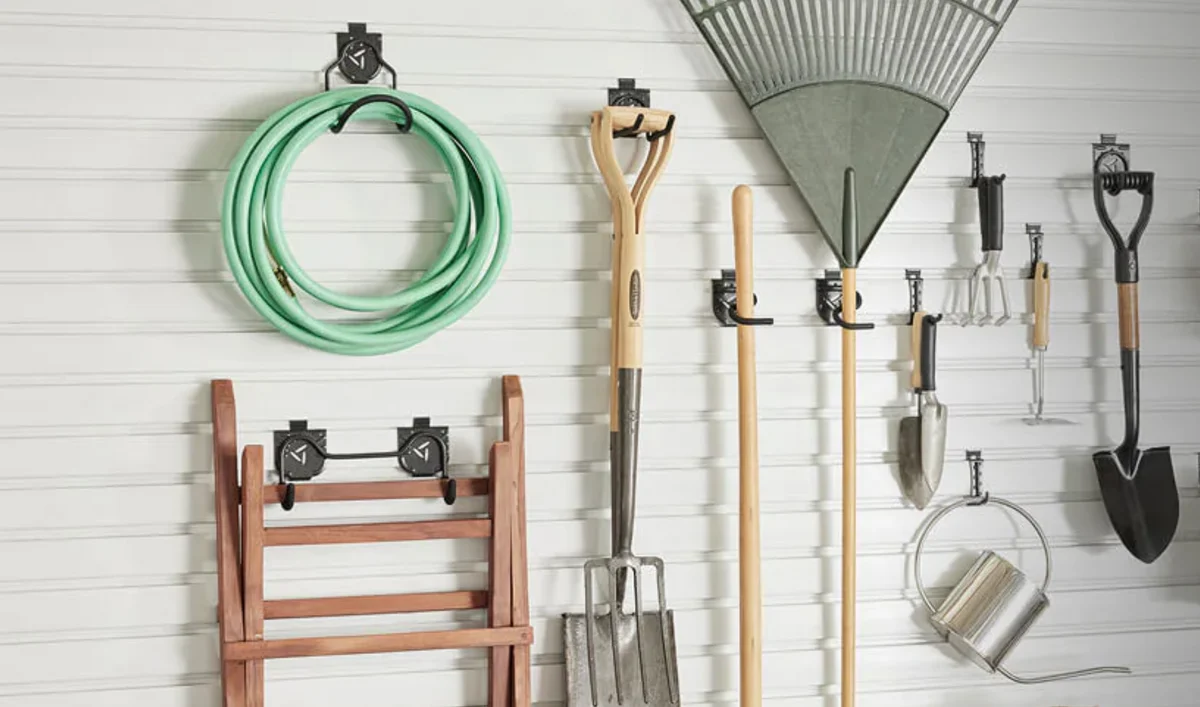
Garden tools become easier to use when they have a dedicated home near the place where outdoor work actually happens. A well-planned outdoor tool station keeps frequently used equipment visible, protected, and ready without turning a patio, shed entrance, or garage wall into clutter.
The goal isn’t to store every gardening item you own. Focus on the tools you reach for week after week.
Build the Station Around Your Daily Tools
Start by identifying the equipment that repeatedly travels between storage and the yard. Hand pruners, gloves, trowels, watering wands, small shovels, and digging forks usually deserve the easiest positions.
Long-handled tools work well on vertical hooks because hanging them keeps the floor open. Smaller items can sit in narrow bins or shallow baskets where you can see what is available without emptying a large container.
A station near an outdoor work area can also complement broader backyard planning ideas by keeping maintenance equipment away from seating and recreation zones.
Choose a Location That Saves Steps
Convenience matters more than creating a picture-perfect storage display. A tool station placed beside the door leading to the garden can save dozens of unnecessary trips during planting, pruning, or cleanup.
Look for a sheltered exterior wall, covered porch corner, side-yard alcove, garage entrance, or potting area. Keep enough clearance around doors, walkways, electrical equipment, and hose connections.
Homeowners gathering practical outdoor living inspiration may notice that good storage often disappears into the architecture instead of demanding a separate structure.
| Station Feature | Works Well For | Main Benefit |
|---|---|---|
| Wall hooks | Rakes and shovels | Clears floor space |
| Small bins | Gloves and hand tools | Quick visibility |
| Narrow shelf | Sprays and accessories | Easy organization |
| Boot tray | Muddy equipment | Contains dirt |
Add Storage That Handles Dirt and Moisture
Outdoor tools rarely return perfectly clean. Soil, damp gloves, grass clippings, and water can quickly damage indoor-style cabinets or unfinished shelving.
Choose materials that tolerate occasional moisture, and allow airflow around damp items. A grated shelf, perforated basket, or open rack can be more practical than an airtight container for equipment that sometimes gets stored before it is completely dry.
Ideas from broader property organization resources can also help when deciding which tools should stay outdoors and which seasonal equipment belongs in deeper storage.
Create a Small Cleaning Zone
A stiff brush mounted nearby makes it easier to knock soil from hand tools before storing them. If a hose bib is close, leave enough room to rinse muddy equipment without spraying the entire station.
A small bucket for twine, plant clips, broken gloves, and other loose pieces prevents these items from accumulating on shelves.
Make Frequently Used Items the Easiest to Reach
Storage becomes frustrating when everyday tools sit behind equipment that only comes out twice a year. Keep regular-use items between roughly waist and shoulder height where they can be grabbed without bending or reaching awkwardly.
Heavy equipment should remain lower. Sharp tools need secure mounting rather than loose placement on open shelves, especially in areas used by children or pets.
Seasonal items can occupy higher hooks, labeled containers, or secondary storage elsewhere.
Where Outdoor Tool Stations Often Go Wrong
Trying to fit every outdoor possession into one compact station usually creates more clutter, not less. Fertilizer spreaders, power equipment, pool accessories, landscaping tools, and hand gardening supplies may need separate zones.
Another mistake is building storage directly against areas that remain wet after rain. Even weather-resistant materials last longer when air can circulate around them.
Avoid positioning sharp tools where people routinely brush past them. Convenience should never come at the expense of a safe walking path.
Frequently Asked Questions
Should garden tools be stored outside year-round?
Some tools can remain in sheltered outdoor storage if they are kept dry and protected from prolonged weather exposure. Equipment with electrical components, batteries, delicate finishes, or manufacturer-specific storage requirements may need indoor storage.
How can I organize long-handled garden tools?
Wall-mounted hooks, vertical racks, and slotted tool holders work well. Space tools far enough apart that one rake or shovel can be removed without knocking several others loose.
What should go in an outdoor tool station?
Prioritize equipment used regularly, such as gloves, hand pruners, trowels, watering attachments, rakes, and small cleanup supplies. Store rarely used or bulky seasonal items elsewhere when space is limited.
Make Every Gardening Trip Easier
A useful outdoor tool station removes small obstacles from routine yard work. Put the tools you use most where you naturally pass them, provide ventilation for damp equipment, and keep the floor as open as possible. Start with a simple wall section and a few well-placed holders, then expand only when a genuine storage need appears.