Homeowners in Oakland County, MI researching professional floor care options often encounter two primary cleaning methodologies: hot water extraction (commonly referred to as steam cleaning) and dry chemical surface cleaning (utilizing absorbent chemical powders or bonnet rotary pads). While dry cleaning methods market fast drying times, understanding the fundamental differences in cleaning depth, soil extraction capability, chemical residue levels, and manufacturer warranty compliance is essential for choosing the best maintenance strategy for your home’s carpets.
1. Comparing Deep Cleansing vs. Surface Appearance
Dry chemical compound cleaning involves spreading chemical-soaked absorbent powders or solvent foams over carpet pile, agitating the material with a rotary brush, and vacuuming up the dry compound. While this process brightens surface fiber tips temporarily, it is primarily a surface maintenance treatment. Dry powder cleaning lacks the liquid flushing power required to reach deeper carpet pile, backing, or padding, leaving heavy sand, deep pet soils, and buried allergens trapped inside the carpet matrix.
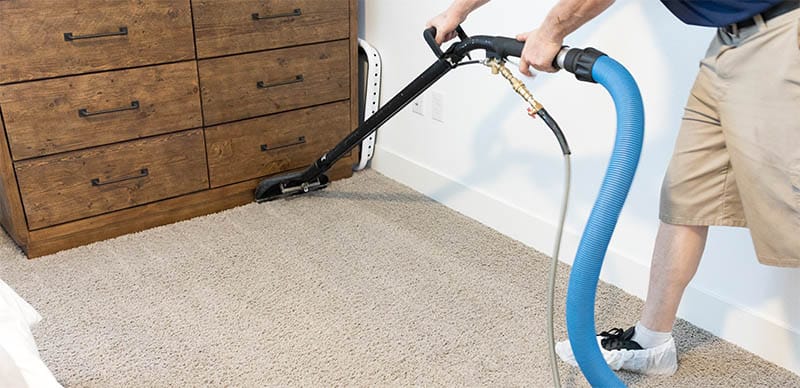
In contrast, hot water extraction injects superheated water solution under high pressure deep into carpet pile, dissolving sticky oils and emulsifying stubborn dirt throughout the full depth of the carpet matrix. Powerful vacuum recovery then pulls out dissolved soil and rinse water completely, delivering true deep cleaning.
2. The Residue Risks of Dry Chemical Compounds
A major disadvantage of dry chemical compound cleaning is the fine chemical residue left behind in carpet fibers. Consumer and commercial vacuums cannot pull 100% of absorbent chemical powders or solvent crystals out of dense carpet pile. The remaining dry chemical residue settles near carpet backings, where it can attract dry soil and irritate skin and eyes.
Hot water extraction utilizes liquid rinsing agents superheated to 200°F that dissolve soils and rinse away completely, leaving carpet fibers soft, clean, and free of dry chemical residues.
3. Why Hot Water Extraction Remains Recommended by Mills
Because hot water extraction delivers superior deep cleaning, soil removal, and fiber restoration, major carpet manufacturers (such as Shaw and Mohawk) explicitly mandate hot water extraction to maintain active carpet wear and stain warranties. Dry powder and rotary bonnet methods are often restricted or excluded under manufacturer warranty terms.
For complete deep cleaning that satisfies carpet warranty mandates, trust a professional carpet cleaning service in Oakland County, MI. Certified thermal extraction removes deep-seated soils, neutralizes stubborn allergens, and keeps your carpeted floors clean, fresh, and fully protected.